| Notes |
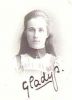
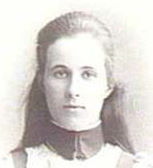
Gladys Reynell was born on 4 September 1881 at Glenelg, Adelaide, on
e of five children of Walter Reynell, land agent and vigneron, and hi
s wife Emily, ne?e Bakewell, a cousin of Elizabeth Nicholls. Educate
d at her Reynella home and Tormore House School, she travelled with he
family in Europe in 1909. In Adelaide she studied painting with Marg
aret Rose Macpherson, who became a close friend. In 1912 they went t
o Europe, living and studying in Paris and Brittany and enjoying an id
yllic life as artists until 1913 when they moved to live and paint i
London; they also taught in Ireland. Gladys exhibited with the Old S
alon in Paris, with several English groups, and at the Royal Academy o
f Arts, London, and the Walker Gallery, Liverpool. Her sister Emily a
d brothers Rupert and Carew supported the war effort. Rupert, a neuro
logist, valued handicrafts in the rehabilitation of shell-shocked sold
iers; he influenced Gladys and Rose Macpherson to learn pottery at th
e Camberwell School of Arts and Crafts, London, in 1916. Next year a f
iend sent Gladys some Kangaroo Island clay which excited her: 'I thou
ght then that it could be the most delightful thing on earth to make p
ots in Australia from virgin clay'. In 1918 Gladys and Rose began teac
hing pottery to soldiers at Seale Hayne Neurological Hospital, Devon
. In 1919, responding to her father's fatal illness, Gladys Reynell c
ame home; in September she and McPherson shared an exhibition at Preec
e's Gallery. At Reynella Gladys established the Reynella Pottery; it w
as the first time in the State that one person was responsible, in al
l the stages, for producing practical, decorative ceramics. She exploi
ted a seasoned dump of buff-coloured clay from a well at nearby McLare
Vale; built and fired her own kiln; threw simple, robust forms base
d on early European folk pottery; and decorated them with designs insp
ired by both Aboriginal art?she was probably the first potter to use t
his as a source?and the modernists. Reynell's work anticipated that o
f the influential English studio potter Bernard Leach; she espoused th
e English Arts and Craft Movement's ideals concerning the handcraft et
hic, and the integrity and tradition of early craftsmen. She investiga
ted and emulated the work of Gottlieb Zoerner, an early South Australi
an potter. Reynell's closeness to Margaret Preston, as Rose was know
after her marriage, and their receptiveness to modernism, is eviden
t in Reynell's designs; the colour, form and primitivism of Roger Fry'
s Omega workshops also provided inspiration. Reynell decorated her ea
thenware teapots, mugs, vases, plates, bowls and jugs, utilizing trad
itional English slipware and sgraffito techniques to produce abstrac
t patterns, and to illustrate Australian fauna and flora, and local co
untry and farm scenes which reveal her gentleness and warmth. Much o
f her work was finished with the characteristic rich 'Reynella blue' s
lip. To the dismay of her family, on 14 August 1922 at St Mary's Chur
ch, Edwardstown, Gladys married George Samuel Osborne (ne? Wackett, 18
83-1976), an ex-serviceman and gardener at Reynella; they had no child
en. In Ballarat, Victoria, they set up Osrey Pottery. With her husban
d as assistant, Gladys produced pottery for sale at fairs?she would th
ow her pots in the street, causing a sensation?and in shops until 192
6, when George contracted lead poisoning from lead in the glazes. The
y moved to rural Curdievale where she resumed painting and making wood
cuts. Her article, 'Knowledge or feeling in art' (Art in Australia, 1
5 August 1935), elaborates her philosophy; and her contribution, 'Reyn
ella Pottery' to Louise Brown (ed.), A Book of South Australia (Adelai
de, 1936), describes her method of making pottery. From 1939 George a
d Gladys lived in Melbourne. In World War II she worked in the army p
ay corps, in the Taxation Office, and as a translator of French. The
y had a penurious existence until Gladys died of cancer on 16 Novembe
1956; her husband scattered her ashes at Reynella. Her ceramics, th
e work of one of Australia's earliest studio potters, have been avidl
y collected since the late 1960s and are in most major art galleries
, including the National Gallery of Australia, Canberra. The South Aus
tralian Art Gallery holds a portrait, by her friend Bessie Davidson, o
f a youthful, lively and pretty Gladys in riding habit. Source: Nori
s Ioannou, 'Reynell, Gladys (1881 - 1956)', Australian Dictionary of B
iography, Volume 11, Melbourne University Press, 1988, pp 367-368, onl
ine at http://www.adb.online.anu.edu.au/biogs/A110377b.htm
|
 Search | Advanced Search | Search Families | Search Site
 1881 - 1956 (75 years)